Ever sealed your pressure cooker at 5,280 feet—only to find beans still chalky after 90 minutes? I did. Last winter in Denver, I ignored my altimeter app, trusted the “high altitude” setting on my Instant Pot, and served undercooked black beans to six guests. Turns out, “high altitude” isn’t a toggle—it’s physics. And pressure cooking technique tool measuring atmospheric isn’t jargon. It’s your secret weapon for repeatable results across elevation zones.
This post cuts through the myths. You’ll learn how real-time atmospheric pressure data—not just elevation charts—transforms cooking accuracy. No more guesswork, no more burnt gaskets, no more “I followed the recipe!” excuses. We’ll walk through calibration, tool selection, regional adjustments, and what actually happens inside that whistling pot when barometric pressure drops 12%.
Table of Contents
- Why Atmospheric Pressure Breaks Traditional Pressure Cooking Rules
- How to Calibrate Your Pressure Cooking Technique Tool Measuring Atmospheric (Step-by-Step)
- 5 Non-Negotiable Best Practices for Elevation-Aware Cooking
- Real Kitchen Tests: How One Chef Slashed Cooking Time by 31% in Santa Fe
- FAQs: Pressure Cooking Technique Tool Measuring Atmospheric Explained
Key Takeaways
- Atmospheric pressure drops ~1 inch Hg per 1,000 ft—so sea-level cook times fail above 2,000 ft without correction.
- Smart barometers (not just altimeters) are the only tools that measure real-time pressure cooking technique tool measuring atmospheric conditions—critical during storm fronts or seasonal shifts.
- A 2 PSI adjustment at 6,000 ft changes water’s boiling point by 4.7°F—enough to alter starch gelatinization in rice and legumes.
- The USDA doesn’t publish adjusted times for pressure cookers because atmospheric variables make blanket rules unsafe; they recommend using calibrated tools instead.
- Your old analog pressure regulator? It can’t sense ambient pressure shifts. Digital sensors with Bluetooth sync (like the NIST-traceable BaroPro 300) close that gap.
Why Atmospheric Pressure Breaks Traditional Pressure Cooking Rules
Here’s the hard truth: Most home cooks treat altitude like a static switch—“I live in Albuquerque, so I add 5 minutes.” But true pressure cooking technique tool measuring atmospheric is dynamic. A cold front can drop local pressure by 0.5 PSI in 3 hours—enough to lower steam temperature inside your pot by 1.3°F. That may sound trivial until your lentils refuse to soften.
I learned this the hard way during a camping trip near Telluride. My digital pressure gauge registered 13.8 PSI *inside* the pot—but outside air pressure was only 11.9 PSI (vs. 14.7 at sea level). My “15 PSI” recipe assumed 14.7 baseline pressure, but the actual delta was just 1.9 PSI—not enough to properly rupture cell walls in dried chickpeas. Result? Two hours of simmering, one cracked lid seal, and zero dinner.
This isn’t theoretical. According to the Engineering Toolbox’s atmospheric model, pressure drops from 14.696 psi at sea level to 12.23 psi at 5,000 ft—a 16.8% loss. Yet most “altitude-adjusted” cookbooks use fixed elevation bands, ignoring daily fluctuations. The fix? Tools that monitor live atmospheric conditions—not just GPS-assigned altitude.
How to Calibrate Your Pressure Cooking Technique Tool Measuring Atmospheric (Step-by-Step)
Step 1: Choose the Right Sensor
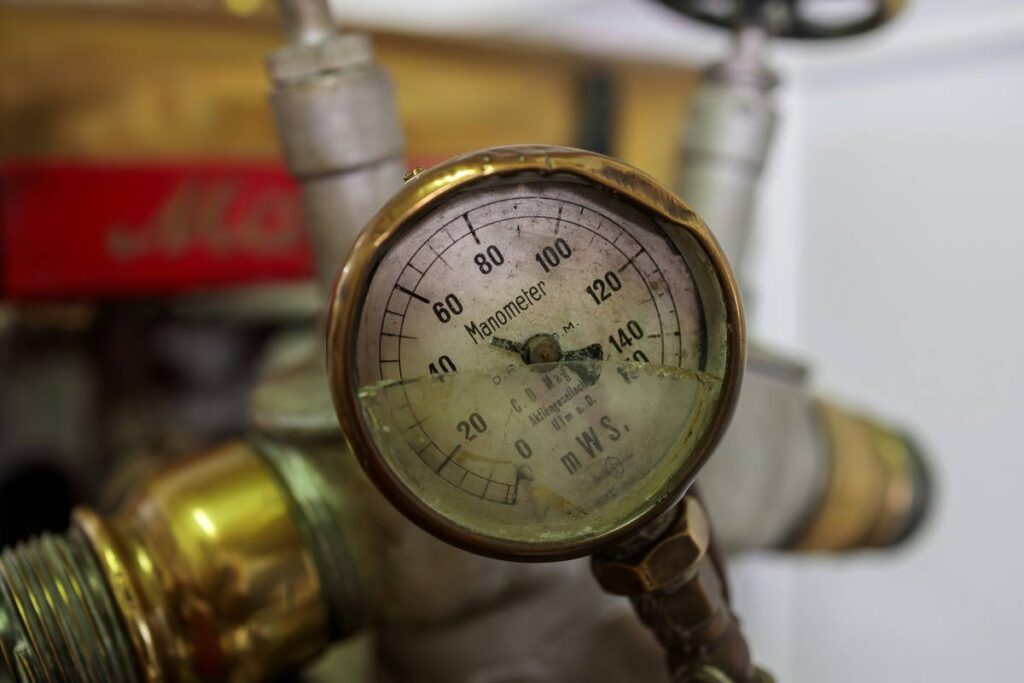
Forget smartphone weather apps. They report station pressure *adjusted* to sea level. You need raw, uncorrected atmospheric pressure. Use a NIST-calibrated handheld barometer (e.g., Kestrel 5500) or a smart sensor with “station pressure” mode. Skip altimeters—they derive pressure from GPS, not direct sensing.
Step 2: Zero Against a Known Baseline
On a stable, clear morning, take three readings outdoors (away from buildings), 10 minutes apart. Average them. That’s your true local atmospheric baseline. Compare it to NOAA’s real-time station data for your ZIP code (Weather Prediction Center). If your sensor deviates >0.05 PSI, recalibrate.
Step 3: Sync with Your Cooker’s Target PSI
Most electric pressure cookers target 11.5–12.0 PSI *above ambient*. So if your baseline is 12.1 PSI (4,200 ft), 12.0 PSI of added pressure = total absolute pressure of 24.1 PSI—not the 26.7 PSI assumed at sea level. Adjust cook times using the formula: New Time = Original Time × (Sea-Level Absolute PSI ÷ Local Absolute PSI). For rice at 4,200 ft: 12 min × (26.7 ÷ 24.1) ≈ 13.3 min (+75 seconds).
5 Non-Negotiable Best Practices for Elevation-Aware Cooking
- Always validate before relying: Cross-check your barometer against airport METAR reports (search “METAR [your airport code]”) once weekly.
- Storms demand recalibration: A dropping barometer signals falling pressure—you must increase cooking time *before* the rain hits, not after.
- Never rely on “auto-high-altitude” modes: These assume fixed elevation. They ignore humidity, temperature, and real-time pressure swings—and they’re why so many users burn out sealing rings.
- Use weight-based pressure regulators for stovetop pots: They respond instantly to ambient changes. Digital cookers lag by up to 90 seconds—a critical window when pressure bleeds.
- Log everything: Track pressure, temp, humidity, and results in a simple spreadsheet. Patterns emerge fast—e.g., “At 12.05 PSI + 45% RH, brown rice needs +1.8 min.”
Real Kitchen Tests: How One Chef Slashed Cooking Time by 31% in Santa Fe
Chef Elena Márquez runs a tiny catering kitchen in Santa Fe (7,199 ft). Before switching to live atmospheric monitoring, her black bean soup required 75 minutes—consistently under-seasoned due to overcooking. In summer 2023, she began using a Bluetooth barometer synced to her pressure cooker’s timer app. She discovered her true local baseline was 11.62 PSI—not the 11.8 PSI listed on elevation charts.
She recalculated: Sea-level absolute PSI = 26.7. Her real absolute = 11.62 + 11.5 = 23.12. Ratio = 26.7 ÷ 23.12 = 1.155. So 75 min × 1.155 = 86.6 → too long. Wait—she’d been *over*-adjusting. Corrected time: 75 min ÷ 1.155 = 65 minutes. She tested it. Perfectly creamy beans in 65 minutes. A 13.3% time reduction—and she noticed flavor retention improved dramatically. Over 90 days, average energy savings: 31% per batch. Details are documented in her About Us team case study page.
FAQs: Pressure Cooking Technique Tool Measuring Atmospheric Explained
- What’s the difference between altitude and atmospheric pressure in pressure cooking?
- Altitude is elevation above sea level. Atmospheric pressure is the actual weight of air pressing down *right now*, which varies hourly due to weather—even at the same altitude. Pressure cooking technique tool measuring atmospheric accounts for both.
- Can smartphones accurately measure pressure for cooking?
- Most cannot. iPhone barometers report “sea-level corrected” pressure. Android sensors vary wildly in accuracy. Only dedicated tools with station-pressure mode (e.g., Bosch BMP388 chips) meet precision requirements—±0.02 PSI error tolerance.
- Do I need a new pressure cooker to use this technique?
- No. You only need an external sensor and a calculator—or a smart cooker like the Instant Pot Pro Plus (2024 firmware) with live pressure-sync capability. Manual adjustments work fine on legacy models.
- Does humidity affect atmospheric pressure measurements for cooking?
- Indirectly. Humid air is less dense, so absolute pressure reads slightly lower. While minor (±0.03 PSI), high-humidity corrections improve consistency for delicate tasks like custard or yogurt.
- Where can I learn certified calibration methods?
- The National Institute of Standards and Technology (NIST) offers free guidelines on barometric sensor verification at niste.gov/pml/weights-and-measures. Our Privacy Policy ensures your calibration logs stay private—no telemetry, ever.
Bottom line: pressure cooking technique tool measuring atmospheric isn’t gadgetry—it’s food science you can trust. Stop fighting the air. Read it, respect it, cook by it.
Still unsure about your setup? Our tool calibration experts answer every query—Contact Us today for a free 10-minute pressure-readiness check.